Sloping or sunken concrete slabs can risk safety, property value, and peace of mind—especially in Central Florida’s challenging soils.In our experience at GCM Best Services, understanding why these issues occur, and how to address them, takes more than a quick fix. You need to know what’s really happening beneath your feet.
We’ll walk through symptoms, causation, diagnosis, and step-by-step troubleshooting. By the end, you’ll interpret the warning signs and weigh your repair options with confidence.
Concrete that sinks tells a story—sometimes, you just have to listen.
Why do concrete slabs slope or sink?
Most people spot a trip hazard, but rarely see the slow changes beneath their homes, patios, or driveways. We want to shine a light on what causes your concrete to slope or settle lower than intended.
- Poor soil compaction at installation means the ground underneath is loose, so slabs settle over time.
- Heavy rain, fluctuating groundwater, or poor drainage can wash away or weaken the soil base.
- Tree roots or decaying organic matter create voids that become visible as dips or slopes in your slab.
- Clay soils, especially common around Central Florida, shrink and swell seasonally, causing unstable support.
- Research by FHWA confirms even small inconsistencies in slab thickness or support lead to significant issues with cracking and settlement.
While minor cosmetic problems can be the first clue, the real risk is structural. If water flows toward your home, foundation walls or interiors can be threatened. Uneven slabs also increase risk for cracks, especially with vehicle or heavy equipment loads.
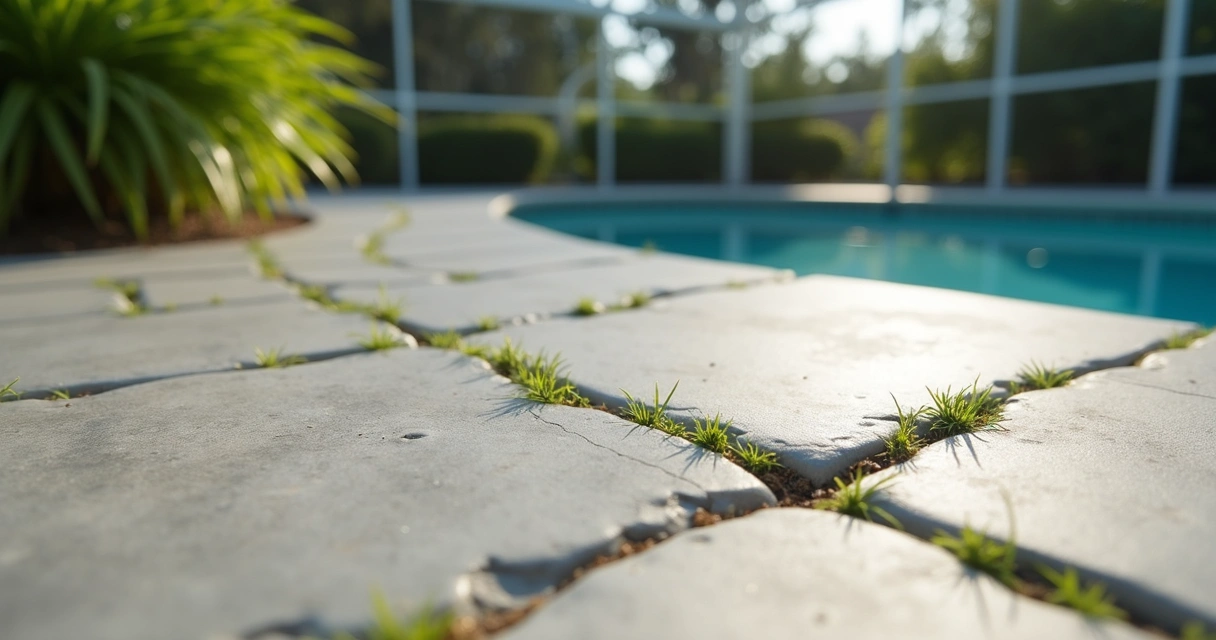
Visible symptoms of sloping or sinking slabs
Troubleshooting a slab problem always starts with what you see—and sometimes, what you feel underfoot.
- Telltale tripping edges along sidewalk joints or driveway cracks
- Gaps between slab and steps or walls (sometimes wide enough for a pencil or finger)
- Water pooling or draining toward your home instead of away
- Shifting pavers or turf abutting concrete, revealing movement over time
- Subtle but increasing bumpiness with vehicles or carts
- Sticky doors, cracked tiles, or separating baseboards where interior slabs have dropped
If the sun casts a funny shadow on your concrete at sunset—you may be looking at a problem.
When we do site visits for GCM Best Services across Orlando and Central Florida, many clients tell us they “just thought it was normal settling.” But sometimes, these symptoms warn of bigger troubles beneath the surface.
What causes slab movement in Florida soils?
Our region is well-known for sandy, sometimes clay-laden soils. The cycle of wet, swampy summers and dry, parched winters stresses even the best-laid concrete.
- Poor site preparation—like skipping the 6-8″ compacted sub-base standard—leads to early settlement.
- Rebar or mesh missing, or improperly placed, lets heavy vehicles flex or break the slab.
- Nearby trees chasing water, especially oaks and pines, disrupt the soil and create voids as roots grow or die.
- Incorrect drainage design, especially without integrated trench drains or slopes, encourages erosion beneath the slab.
- Water pipes or irrigation leaks quietly destabilize the foundation material.
- Studies on concrete pavement performance highlight how moisture, temperature swings, and repetitive wheel loads work together to trigger settlement and surface failure, especially in climates with dramatic seasonal cycles.
Some rare causes include rodents tunneling or subsurface organic material that decays unexpectedly.
How we diagnose sloping or sunken slabs
Detecting problems early makes repairs less costly. At GCM Best Services, we start with a thorough site walk—a methodical approach, measuring, checking for soft spots, and listening to what our clients have observed.
Visual examination
- Check for uneven surfaces using levels, straightedges, or even water hoses for a quick spirit level.
- Inspect abutting walls, features, and landscaping for separation or movement.
- Take photos to track changes over time; patterns can reveal gradual movement.
Subsurface testing
- Probe with a rod or screwdriver around slab edges to find voids or soft subgrade.
- Tap with a hammer and listen for hollow sounds—often a clue to voids below.
Advanced diagnosis methods
Some issues aren’t obvious visually. Advanced tools, such as the electromechanical impedance (EMI) method, help detect slab weakness or movement before visible signs occur. While not routine, these techniques reveal hidden trouble in commercial or high-value residential projects.
Recording and planning
- Draw simple diagrams showing cracks, slopes, or gaps—this helps when evaluating repair progress later.
- Identify water entry points or potential drainage failures.
Not every problem needs immediate repair, but careful diagnosis helps us prioritize safety, cost, and results for every property.
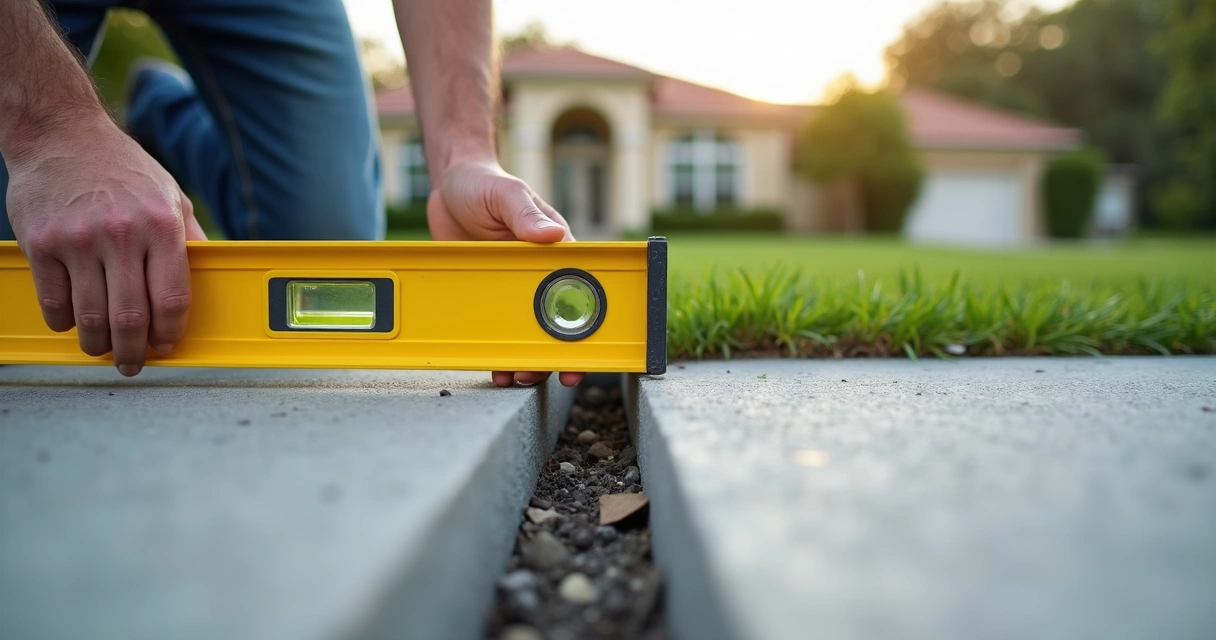
Troubleshooting step-by-step: finding and fixing the cause
Fixing a sloping or sunken slab isn’t only about patching the surface—it means solving the underlying cause.A typical approach for our Central Florida clients might look like this:
- Identify the problem areas. Start with those visible symptoms: dips, cracks, pooling water. Mark them for further review.
- Find the cause below. Probe around for soft ground, washouts, or evidence of burrowing wildlife. Consider recent plumbing or irrigation issues.
- Test for movement. Use a level for slope. Gently rock slabs or listen for hollow sounds, signaling voids.
- Check for ongoing water problems. Look for gutter downspouts, improper grading, or leaking pipes. Fix these before repairing the slab.
- Plan the repair. Decide: Is this a surface-only issue, or does it require deeper interventions (like slab jacking, mudjacking, or replacement)?
If the cause is poor compaction, even the best surface patch will fail. If it’s drainage, always fix the water first.
DIY troubleshooting tips from our crew
- Use blue chalk lines to highlight cracks or shifting over a few weeks or rain cycles.
- Set a marble or tennis ball on a slab and watch the path it rolls—it’s a playful but effective way to visualize slope.
- Document everything you find. Unexpected changes could crop up later.
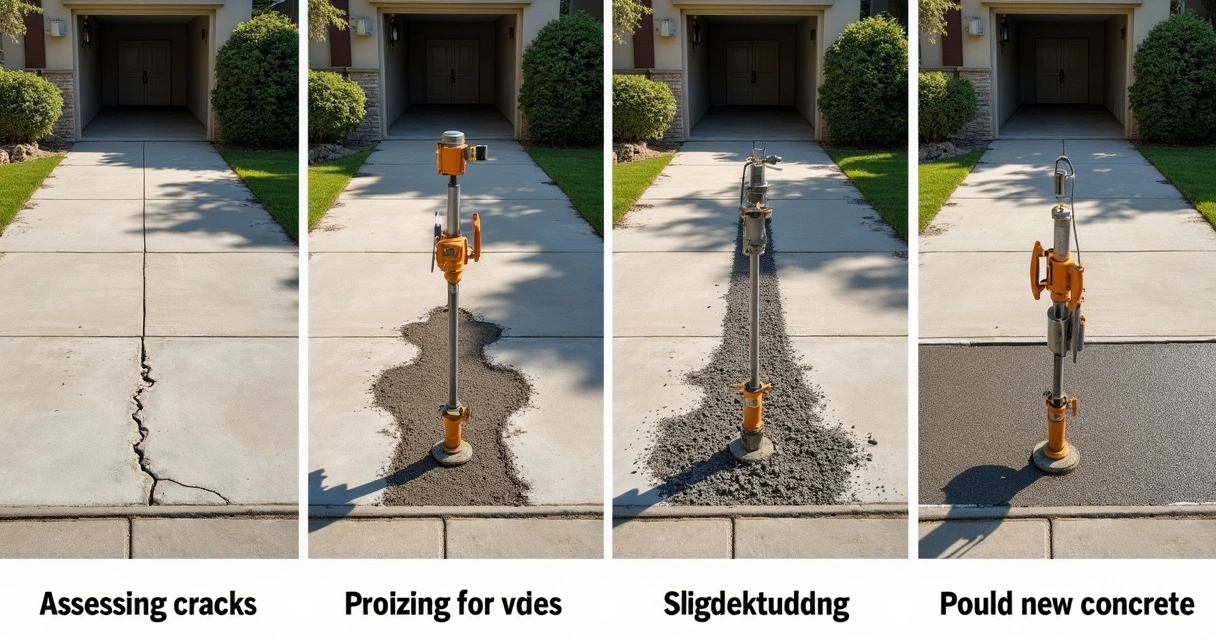
Common repair solutions for sloping or sunken slabs
Every slab and site is different, but most repairs fall into one of a few categories. At GCM Best Services, we match solutions to the specific cause—never a one-size-fits-all approach.
1. Slabjacking (mudjacking or polyurethane foam lifting)
This method involves pumping a cementitious or resin-based slurry under the slab to fill voids and gently raise it back to its original position. It’s best for walkways, patios, driveways, or garage floors with accessible edges.
- Quick cure times (especially with modern foam agents)
- Minimal disruption to landscaping or adjacent structures
- Effective where the underlying soil is mostly stable, but needs some reinforcement
For larger, commercial, or structurally important slabs, always confirm load requirements before re-leveling.
2. Soil stabilization and subgrade compaction
Sometimes, it’s not enough just to lift the slab. Stabilizing the soil itself—often using mechanical compaction, injection of lime or polymer agents, or geotextile placement—increases long-term performance.
- Reduces risk of the problem returning after a heavy rain or drought
- Especially useful for larger poured areas, such as driveways or pool decks
Guides like the Building America Solution Center resource on slab-on-grade foundations show that approaches like turned-down footings can help prevent repeat settling in poor soils.
3. Surface patching and re-leveling (short-term)
This is best for minor trip hazards or if you need a “band-aid” fix while budgeting for a permanent solution. Polymer-modified thin overlays can temporarily smooth joints or fill small drops, but don’t resolve problems caused by poor soil or water action.
4. Full slab replacement (for severe cases)
If more than 50% of the slab is cracked, sunken, or otherwise compromised, replacement may be the safest option. This is often the case with old or poorly constructed patios where subgrade correction wasn’t done.
- Replacement offers the chance to correct grading, install proper sub-base, drainage, and reinforcement.
- New installations should meet modern code and best practices, much like detailed in our concrete installation guide.
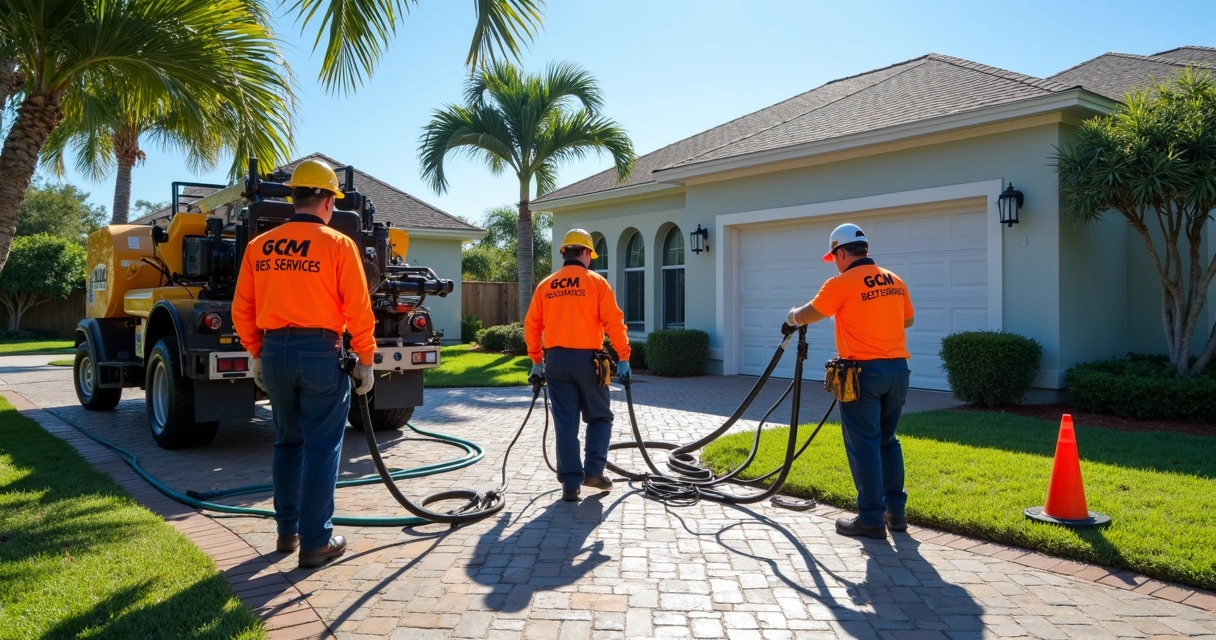
Prevention: what we recommend for Florida homeowners
Once repairs are complete, we always share these steps to reduce the risk of a repeat problem:
- Regularly clean and inspect slab surfaces and joints for new cracks, movement, or drainage issues.
- Maintain landscaping—roots should be kept clear of slab edges. Remove decaying stump or roots close to poured surfaces.
- Grade soil away from the slab to keep water moving in the right direction.
- Install drains or catch basins if water consistently pools or flows over the surface.
- For new projects, always ensure a compacted, thick sub-base, with correct rebar or mesh, and use mixes suited to Florida conditions (3,000–4,000 PSI concrete).
- Upgrade to fiber-reinforced concrete when possible. Research on fiber-reinforcement shows it improves resilience under heavy loads and reduces surface cracking.
We’ve compiled more tips specific to this climate in our article about preventing cracks in Florida concrete.
Our process: how GCM Best Services approaches slab troubleshooting
We believe in a transparent, step-by-step process:
- Free on-site assessment—measuring, photographing, and discussing your observations.
- Clear, written estimate—detailing cause, proposed solution, and warranty coverage.
- Design, permits, and (if needed) HOA coordination—for repairs involving major work, equipment, or drainage changes.
- Scheduled, OSHA-safe work—our crews keep the site clean and communicate daily progress with you, including photo updates.
- Final walkthrough—with your approval, and guidance for long-term maintenance.
We don’t disappear after payment. Every project comes with a written warranty and a guide tailored for the specific repairs performed. The whole process aligns with what we outline in our licensed contractor’s concrete repair guide.
When to call a professional
Not every issue can be safely diagnosed or repaired by a homeowner—sometimes, professional help isn’t just safer, but more cost-effective in the long run.
- If the slab is load-bearing or supports a structure (garage floor, foundation), always get expert input.
- Water intrusion threatens the home’s interior, electrical, or mechanical systems.
- Slabs with visible rocking or recent rapid movement signal a larger, unseen void or plumbing failure.
- Previous repairs have failed repeatedly, or you’re unsure about the original cause.
You can find more resources and project insights in our concrete resource library and our write-up on choosing a concrete company in Orlando.
If it feels unsafe to walk on, it probably is—don’t wait to get a professional opinion.
Conclusion: peace of mind beneath your feet
Fixing—or better yet, preventing—a sloping or sunken slab takes more than a quick skim coat. It takes understanding, experience, and a process that gets to the real cause. At GCM Best Services, we’ve seen how corrected slabs bring back not just property value, but the feeling of security and pride in your space.
Ready to solve your concrete problems for good? Our Orlando and Central Florida team can answer your questions, offer solutions, or give you a no-obligation quote—so you can step forward with confidence.
Ready for a professional quote? 📞 (407) 250-1948 • 24–48h • Orlando, Tampa & area.
Frequently asked questions
What causes concrete slabs to sink?
Concrete slabs usually sink due to poor soil compaction, water erosion under the slab, fluctuating moisture levels, or root and organic decay beneath the surface.Slabs can also settle if the original sub-base wasn’t properly compacted or thick enough, or if heavy loads have weakened the area over time. In Central Florida, sandy and clay soils shrink or swell between wet and dry seasons, making even well-planned installations vulnerable unless they meet modern prep standards. Extensive research (such as FHWA JPCP studies) confirms that small variations in support can significantly impact pavement life.
How to fix a sloping concrete slab?
Fixing a sloping slab starts with diagnosing and correcting the underlying cause—never just the surface symptoms.Depending on the issue, slabjacking, mudjacking, or resin injection can fill voids and lift the slab. For severe cases or where much of the concrete is cracked, replacement may be the better approach. Water or subsoil issues should be addressed before repair; otherwise, new problems will soon appear. See our troubleshooting process above for detailed steps and always consult a professional if the slab supports a structure.
Is it safe to repair sunken slabs myself?
Some minor repairs—like patching small cracks or filling joints—are safe for DIY with care and the right products. However, dealing with large sunken areas, heavy lifting, or underlying water and structural issues should be left to experienced professionals, due to risks like slab collapse, further settling, or accidental damage. When in doubt, a pro can help you avoid bigger problems and higher costs.
How much does slab leveling cost?
Costs vary based on slab size, cause of sinking, and chosen repair method. Simple slabjacking can be cost-effective for areas up to a few hundred square feet, while full replacement (for extensive damage) is more expensive. Soil conditions, access, and drainage repairs affect pricing too. Generally, the earlier you address the problem, the less you’ll spend—and proactive maintenance is always more affordable than a full slab replacement.
When should I replace instead of repair?
If more than half the slab is cracked, moving, or sunken—or if the cause is ongoing soil instability that can’t be easily corrected—replacement is often safer and longer lasting. Replacement lets you upgrade base materials, drainage, and reinforcement, reducing the risk of future problems and preserving your investment. If in doubt, have the site professionally evaluated before making a decision.