Nothing calls for confidence quite like a fresh concrete driveway or patio, gleaming and solid, the promise of years ahead spelled in each smooth slab. But Florida’s sun pounds down. Soils shift. Rains come hard and fast. Customers in Central Florida, like those we serve at GCM Best Services, want lasting value—and they want to know what a warranty on outdoor concrete truly means for 2026 and beyond.
In our experience, trust in a concrete installation starts with clarity: clear explanations of what a warranty covers, how it works, and what’s expected on both sides. So, let’s break down what’s actually covered, what isn’t, new trends for the upcoming year, and how to use a warranty if things don’t go as planned. There’s more to it than just a handshake and some paperwork.
A warranty is only as good as what’s written—and what’s delivered.
Why outdoor concrete warranties matter in Florida
We’ve seen how outdoor concrete surfaces in Central Florida face unique punishment. Hot, humid weather, plus those sudden, drenching rainstorms, means slabs, driveways, and walkways must be built right from the start. That’s why so many Floridians look for specific warranty protections.
- Florida soils are often sandy or clay-heavy. They shift; proper sub-base and reinforcement are critical.
- UV and heat exposure are relentless. Wrong mixes, or rushed installation, will show their faults fast.
- Rain and drainage are wild cards. Improper grading can cause ponding, erosion, and cracks.
Customers turn to licensed, insured contractors like our own GCM Best Services because we put the details in writing—and stand behind them with photos, inspection reports, and written warranties. But not all warranties are created equal. Regulations and industry standards change. As 2026 approaches, new expectations and common questions are emerging.

What should a concrete warranty include in 2026?
An effective concrete warranty in 2026 should specify exactly what’s covered, for how long, and any conditions that must be met. We structure our warranties at GCM Best Services with transparency, because when ambiguities arise, so does frustration. Each coverage type serves a unique purpose.
Materials and workmanship warranties
According to Federal Highway Administration guidelines, most construction materials and workmanship warranties for pavements range from 2 to 4 years. These focus on initial quality—meaning correct mixing, pouring, jointing, and finishing methods, as well as use of specified aggregates. In our proposals, you’ll find warranties tailored to conditions in Central Florida soils, like:
- 6–8″ compacted sub-base—reduces early cracking
- 3,000–4,000 PSI concrete mixes—balances strength with workability
- Rebar or mesh as specified—reduces structural cracks
- Expansion and control joints placed correctly
If an edge spalls because a control joint was missed, that’s a workmanship issue—warranty covers repairs. If concrete starts flaking from the surface under normal use, mixing or finishing could be to blame—again, usually covered if within the stated period.
Performance warranties: durability over time
Longer “performance” warranties—designed to stand up to real-life use and weather—can extend beyond installation. Referencing Federal Highway Administration reports, some contracts now offer coverage from 5 up to 20 years, but duration depends on site and contract. With us, these are typically available for larger commercial flatwork, and they outline conditions like:
- Slab remains structurally sound (no major settlement or heaving)
- Surface finish does not delaminate or excessively wear
- Rebars or mesh don’t show through or corrode abnormally
- Drainage and slopes perform per plan, avoiding ponding
These warranties have checks built in—for instance, annual inspections or maintenance logs. Not all residential installations offer extended performance coverage, but in high-profile or custom jobs, it’s increasingly common.
Written versus “verbal” promises
We can’t stress this enough: Always get warranties in writing, with clear language about start and end dates, covered items, exclusions, and required homeowner actions. We document everything in our GCM Best Services contracts, attaching photos at walkthrough and after punch lists are completed. Trust comes from specifics, not from casual assurance.

What events or defects are typically covered?
Concrete warranty coverage should name the actual problems (“defects”) that trigger repairs or replacement. Here’s what reputable Central Florida contractors—ourselves included—map out. Keep in mind that warranty coverage can be nuanced.
- Excessive cracking: Tight surface “shrinkage” cracking may occur, but anything larger than 1/4″ width, running through a slab, or indicating sub-base failure is usually covered.
- Spalling or flaking: Surface coming off in flakes, or sand/dust coming loose, if not due to deicer use, is typically a material or curing fault.
- Scaling: Finish layer peels away because of improper finishing, overwatering, or running finishing machines too early.
- Pop-outs: Stones “popping” from the surface, especially if hard aggregates weren’t used. The National Academies Press report highlights using hard aggregates, which 37% of U.S. states agree can improve resistance.
- Improper slope/drainage: Water pooling, or “birdbaths,” should not occur if the planned grades were followed.
- Premature heaving or settling: Sunken or raised sections due to improper compaction, uncontrolled organic material under slab, or missed base prep.
If workmanship, materials, or documented installation process caused the problem, warranty usually applies.But there are all sorts of scenarios where coverage is limited or denied—sometimes fairly, sometimes painfully.
What is usually not covered by warranty?
Reading the warranty closely matters. The most common exclusions, based on years of reviewing and drafting contracts at GCM Best Services for Orlando and Central Florida homeowners:
- Hairline shrinkage cracks: Almost unavoidable, these fine cracks don’t pose structural risks. Moisture or rapid temperature swings can create them even on perfect jobs.
- Surface stains or discoloration: Oil, leaf tannins, rust marks, or fertilizer can alter the color. Not a warranty defect.
- Concrete damaged by salt or harsh deicers: Most warranties lump this with “abuse.” Using chemical deicers in our climate can speed up surface damage.
- Damage from vehicles or heavy loads beyond design: Parking a box truck on a patio designed for foot traffic will void most warranties.
- Settlement from major underground leaks or tree roots: Structural problems caused by non-concrete factors, such as burst pipes or aggressive roots.
- Owner neglect: Failure to clean, seal, or follow provided care instructions can limit warranty claims.
- Acts of nature: Flooding, hurricanes, earthquakes, or other events labeled “force majeure.”
Still unsure? Our maintenance guides spell out what’s required to keep your warranty valid—cleaning routines, limits on vehicle weights, and tips to avoid surface stains.
Best practices for outdoor concrete durability
In our experience servicing Central Florida, a warranty is as strong as the original installation. And quality installation is the single best protection against costly claims. Drawing from standards like Federal Highway Administration advice about temperature controls during batching, here’s what we check and document on every project:
- Proper sub-base compaction: 6–8″ of compacted material, especially in sandy or clay soils.
- Approved PSI mixes and aggregate quality: 3,000 to 4,000 PSI, hard aggregate for wear resistance.
- Temperature and humidity control: Concrete placed when below 90°F; anything hotter risks rejection. Water is added only by trained crew, if mix is stiff.
- Curing process: Moisture in the first critical days reduces random cracking.
- Well-placed joints: Control and expansion joints at regular, specified intervals.
- Drainage and slope: Slab sloped away from buildings, with positive drainage to avoid puddling.
For more details on the best protections against Florida’s weather and soils, our guide on preventing cracks in Florida concrete patios and driveways covers this step by step.
What do you need to do to keep your warranty valid?
If only it were as simple as setting and forgetting. Concrete warranty claims can be denied if certain “maintenance requirements” aren’t met—something we highlight during project handoff. Basic regular care almost always protects your warranty rights.
- Follow care guidelines: We hand over simple maintenance instructions—when to clean, reseal, and how to avoid avoidable stains.
- Don’t overlay with other materials: Adding tiles, carpet, or another finish coat may void the warranty.
- Avoid corrosive chemicals: Harsh deicers or acids usually trigger exclusions.
- Don’t block proper drainage: Landscaping or pavers shouldn’t dam water flow.
- Use as intended: Heavy trucks or sharp impacts aren’t covered if not designed in the slab specs.
If you’re ever in doubt, just ask. We prefer a quick call or walk-through over an unpleasant claim dispute months later.
How to file a warranty claim for outdoor concrete work
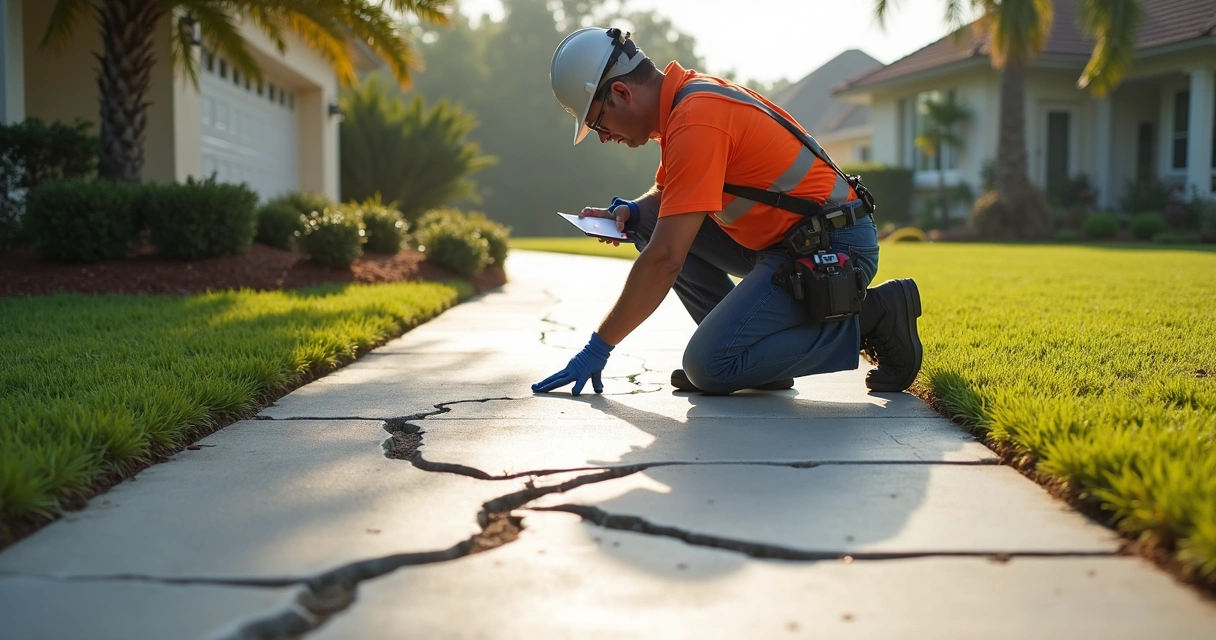
If something goes wrong, documentation is your friend. When clients call us about an issue, here’s what usually works best:
- Take photos showing the issue. Get close-ups and overviews. Lighting helps—shadows can highlight cracks or spalls.
- Review your contract and warranty for details on what’s covered.
- Contact your contractor right away. The sooner, the better, as some problems worsen quickly.
- Schedule an inspection. We set up visits within days in most Orlando and Tampa area jobs.
- Get a written repair plan. Good contractors, like our team, will outline next steps—timeline, methods, and who pays if the issue falls under warranty.
Most claims are resolved with repairs, not full replacement. A small patch, surface grind, or re-application of sealer often brings slab surfaces back into spec. Replacement happens only on major failures, and we rely on both our written documentation and step-by-step review with our clients.
Unique to 2026: trends and evolving standards in concrete warranties
Warranties in the coming year are adapting to new materials, codes, and digital documentation. Based on our own practices at GCM Best Services, and by tracking trends across the state (minus any discussion about competitors, of course), here’s what homeowners can expect.
- Photo and video documentation: More contracts now require photo evidence at each stage—before, during, and after installation. Not only does this help in claims, but it gives clients peace of mind.
- Written maintenance logs: Some commercial jobs expect annual logs showing basic upkeep. For homeowners, keeping receipts for sealing or cleaning can help protect warranties.
- Climate-specific mixes: To avoid temp-related defects and settlement risks, Central Florida jobs now often require approval of mixes that match temperature and soil readings at the time of pour.
- HOA and permitting alignment: Most warranties will mention that work was permitted and inspected to code—a big comfort for property value, resale, and insurance.
- Digital warranty management: Many companies—including ours—now store warranty paperwork, photos, and communication digitally. This streamlines future claims or resale questions.
For those wanting deeper dives, our guide on licensed concrete repair contractors near you explains how transparency and written warranty standards are evolving.
When should you request a warranty on concrete projects?
We have a simple answer: always. But especially on jobs like driveways, patios, and sidewalks in Florida—because these see heavy use, abuse, and weather. Short-term jobs (steps, pads, or if budget is tight) may offer briefer warranty windows. Larger projects, whole-driveway replacements, or anything involving drainage or integrated lighting/pavers should always include a documented warranty.
What leads to denied claims or disputes?
From decades of experience, denied claims almost always stem from:
- Poor documentation: Forgotten photos or missing checklists at install time.
- Unclear contract terms: Vague “one-year coverage” language without definition.
- Claiming unrelated damage: Breaks from tree roots or chemical spills, rarely covered.
- Unapproved modifications: Cutting out parts of slab, drilling without proper directions, or overlaying without approval.
We minimize this by thorough intake documents and honest communication from day one.
A handshake is nice. A signed, detailed warranty is better.
What to ask your concrete contractor before signing a warranty
A quick checklist to bring confidence as you review warranty offers in 2026:
- Does the warranty clearly spell out what’s covered and not?
- How long does the standard coverage last? Is there an option for extended performance coverage?
- What’s required from me as the owner to keep coverage valid?
- How do I initiate a claim if something goes wrong?
- Are pre- and post-installation photos included?
- Are the mix, reinforcement, and drainage details included in the contract?
- Is this warranty transferrable if I sell my property?
- Does the company have a track record for honoring claims? (Ask for references or photos of resolved issues.)
We recommend reviewing resources like our article on choosing a concrete company in Orlando for more context on what separates a good contractor from a risky one.
How warranties integrate with other outdoor projects
One question we get is whether the concrete warranty interfaces with other exterior upgrades. For example, does paver edging or artificial turf nearby alter coverage? If you add a summer kitchen atop a slab, does work on utilities impact the original warranty? Our policy is straightforward:
- Additions made by licensed contractors using approved methods will not void the original slab warranty—unless substrate is altered, weights exceed specs, or cuts/drillings impact reinforcement.
- If you combine with pavers or turf, our project warranties spell out integrated drainage and edge performance requirements.
We keep records for each component—so that, in a dispute, it’s easy to see what happened, when, and who did it.
For multi-surface projects, see our advice on driveway and patio installation in St. Cloud.
Conclusion: paving the way for confidence, clarity, and value
In the end, a concrete warranty isn’t just a paragraph on a contract. It’s a reflection of standards, honesty, and mutual responsibility. Here at GCM Best Services, we view warranties as partnerships; we deliver in writing, with photos, walkthroughs, and guidebooks—so you know exactly what to expect, and what to do if something surprises you.
If you have a driveway, patio, walkway, or slab in mind for 2026, and want confidence not just in the pour, but in the years that follow, we’re ready to help.
Ready for a professional quote? 📞 (407) 250-1948 • 24–48h • Orlando, Tampa & area.
Frequently asked questions
What does a concrete warranty cover?
A concrete warranty typically covers defects in materials and workmanship, such as large or structural cracks, surface spalling, premature scaling, or major issues with slope/drainage if these result from the contractor’s work or materials used. Standard hairline cracks or damage from misuse are usually excluded; refer to your specific contract for detailed inclusions and exclusions.
How long does concrete warranty last?
Warranties vary, but most reputable contractors follow guidelines similar to Federal Highway Administration policies: 2–4 years for materials and workmanship, and potentially 5–20 years for performance on large or complex projects. Always check whether your warranty is for materials/workmanship (shorter) or for performance/durability (longer).
What is not covered by warranty?
Generally, warranties do not cover hairline shrinkage cracks, cosmetic discoloration, stains from chemicals or vehicles, damage from heavy loads that exceed the slab’s design, or anything caused by flood, extreme weather, or tree root growth. Acts of nature and owner neglect are almost always excluded.
How can I file a warranty claim?
Collect photo documentation of the problem, review your written warranty, and contact your contractor as soon as a defect is discovered. Written, prompt notification and willingness to schedule an inspection will speed the process and boost your odds of a fair resolution.
Is it worth it to get extended warranty?
For many Florida homeowners, especially for high-use or high-cost projects (driveways, commercial slabs), extended warranties bring peace of mind through long rainy seasons and heavy use, though cost varies by project size and contractor track record. Consider your long-term plans, the concrete’s role in your property, and whether you prefer certainty over a longer period—then weigh the cost-benefit carefully.